Author: Admin

  • Lovers of Sophia

    Lovers of Sophia

    The Power of Philosophy: Understanding the World and Ourselves

    Philosophy is more than an academic discipline—it is a way of thinking, questioning, and understanding the world around us. From the earliest days of human civilization, great minds have sought to unravel the mysteries of existence, knowledge, and morality. Today, philosophy continues to shape our perspectives, influencing everything from science and ethics to politics and personal development.

    The Origins of Philosophy

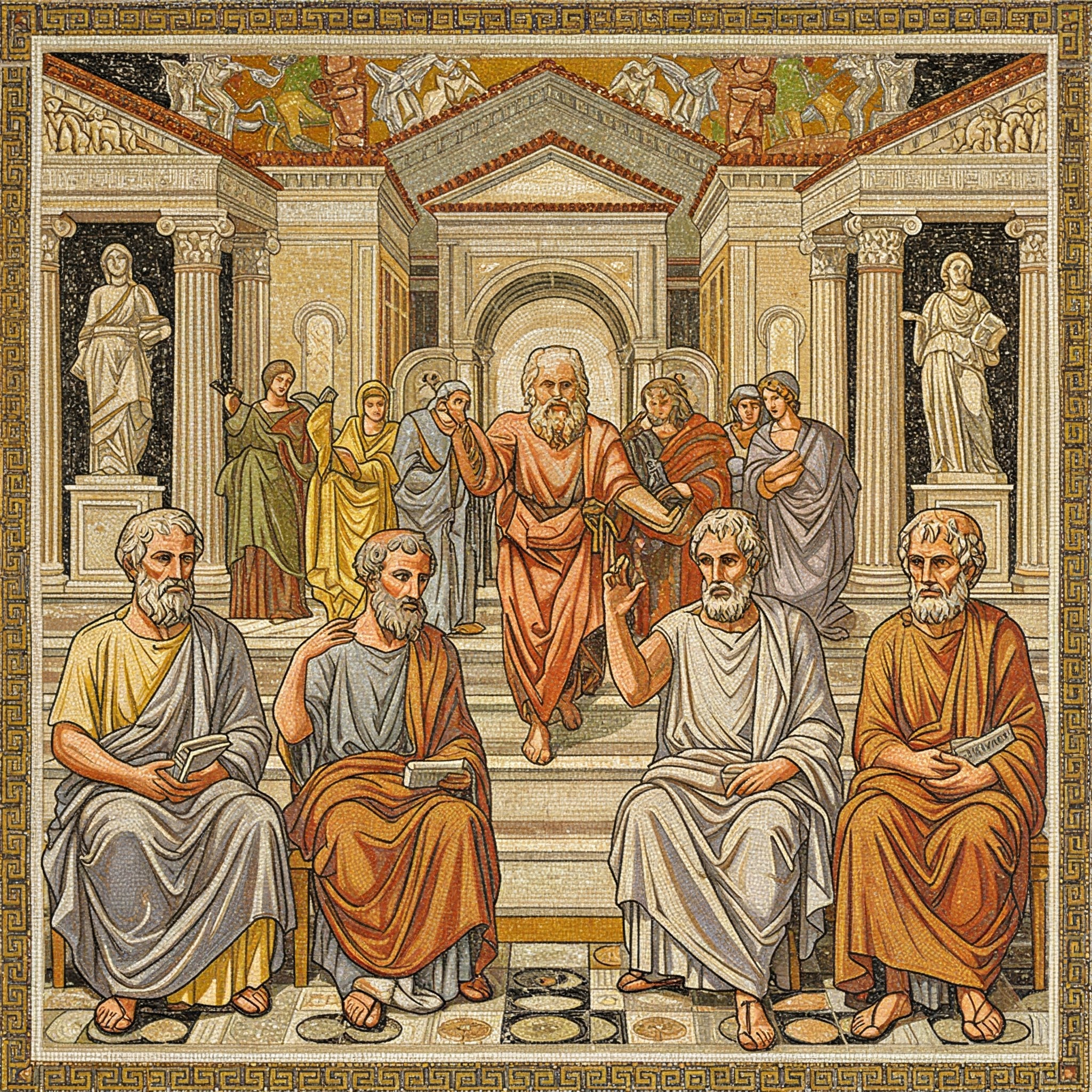
    The word “philosophy” comes from the Greek “philosophia,” meaning “love of wisdom.” The earliest philosophers, such as Socrates, Plato, and Aristotle, sought to explore fundamental questions about reality, justice, and the nature of human beings. Their works laid the foundation for countless fields of study, providing a systematic way of examining problems that still resonates today.

    The Branches of Philosophy

    Philosophy is a vast field with multiple branches, each tackling different aspects of human thought:

    • Metaphysics: Explores the nature of reality, existence, and the universe.
    • Epistemology: Investigates the nature and limits of human knowledge.
    • Ethics: Examines morality, virtue, and what it means to live a good life.
    • Logic: Focuses on principles of reasoning and argumentation.
    • Aesthetics: Studies beauty, art, and human perception of the sublime.
    • Political Philosophy: Questions justice, governance, and societal structures.

    Why Philosophy Matters Today

    In an age of rapid technological advancement, philosophy remains crucial. It provides the intellectual tools to analyze information critically, distinguish between truth and misinformation, and develop ethical frameworks for complex issues like artificial intelligence, genetic engineering, and climate change. Philosophical thinking fosters open-mindedness, allowing individuals to engage in meaningful discussions and challenge their biases.

    Philosophy and Personal Growth

    Beyond academia, philosophy has profound implications for personal development. Stoicism, for instance, teaches resilience and rational control over emotions, while existentialism encourages individuals to define their own purpose. Whether through daily reflection or deep engagement with philosophical texts, embracing philosophy can lead to a more thoughtful and intentional life.

    Conclusion

    Philosophy is not just a subject for scholars—it is an essential tool for anyone seeking to understand themselves and the world. By engaging with philosophical ideas, we cultivate wisdom, foster intellectual curiosity, and navigate life’s challenges with greater clarity. In an era of uncertainty, philosophy remains a guiding light, offering insights that are as relevant today as they were in ancient times.
  • Neoplatonism: A Journey to the One

    Neoplatonism: A Journey to the One

    What exactly is Neoplatonism?

    Simply put, Neoplatonism is a philosophical system developed in the 3rd century AD, largely based on the teachings of Plato, but with significant additions and interpretations. It was founded by Plotinus, a brilliant philosopher who sought to synthesize Plato’s ideas with other philosophical and mystical traditions.

    The Core Concepts:

    Neoplatonism revolves around several key concepts:

    • The One (or the Good):
      • This is the ultimate source of all existence. It’s beyond being, beyond thought, and beyond any description. Think of it as the ultimate reality, the origin from which everything else emanates.
      • It is often described as transcendent.
      • It is ineffable, meaning that it is beyond words.
    • Emanation:
      • Neoplatonists believed that reality unfolds through a series of emanations from the One. This isn’t creation in the traditional sense, but rather a flowing outward, like light from a source.
      • The emanations proceed in a hierarchical order, with each level less perfect than the one before it.
    • The Intellect (Nous):
      • The first emanation from the One is the Intellect, which contains the Platonic Forms or Ideas. This is the realm of pure thought and understanding.
    • The Soul (Psyche):
      • The Soul emanates from the Intellect and is responsible for the organization and animation of the physical world. It acts as a bridge between the intelligible and the sensible realms.
    • The Material World:
      • The final emanation is the material world, the realm of physical objects and change. It’s considered the furthest removed from the One and therefore the least perfect.
    • Return to the One:
      • A central goal of Neoplatonism is the soul’s return to the One. This is achieved through philosophical contemplation, mystical experience, and virtuous living.
      • This return is often described as a mystical union with the one.

    Why is it important?

    Neoplatonism had a huge influence on:

    • Christian theology: Many early Christian thinkers, such as Augustine, incorporated Neoplatonic ideas into their own philosophies.
    • Islamic philosophy: Thinkers such as Al-Farabi and Avicenna were heavily influenced by Neoplatonism.
    • Renaissance philosophy: Neoplatonism experienced a revival during the Renaissance, influencing artists and philosophers like Marsilio Ficino.
    • Mysticism: Neoplatonism provided a philosophical framework for mystical experiences and the pursuit of spiritual union.

    In a Nutshell:

    Neoplatonism offers a fascinating perspective on the nature of reality, emphasizing the importance of the One as the ultimate source and the soul’s journey back to it. It’s a complex and rich philosophical system that continues to inspire and intrigue thinkers today.

  • Dual Channels of Thoughtform Transmission

    Dual Channels of Thoughtform Transmission

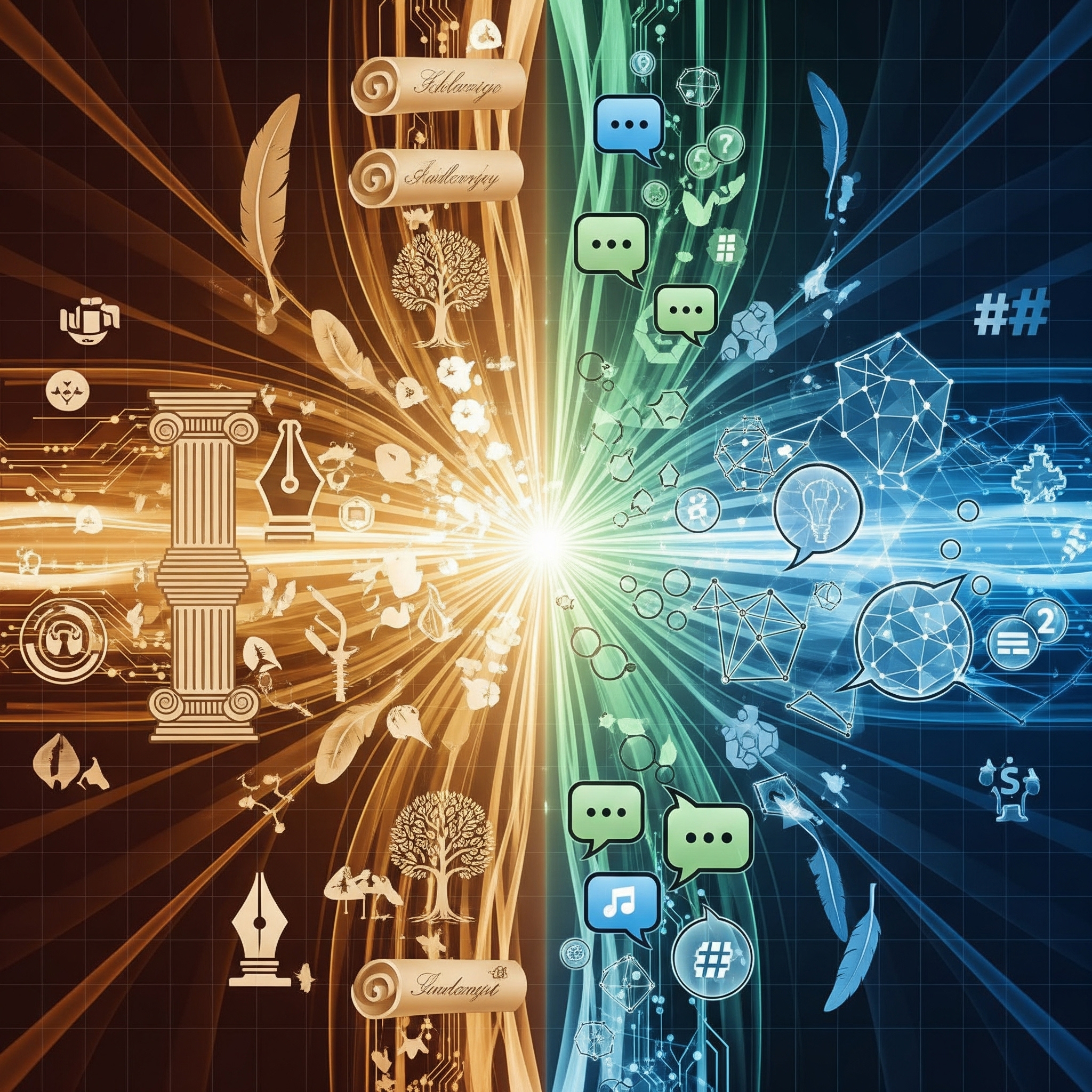
    In every culture, ideas surge along two intertwined streams: the vertical—ancestral lin­eages, traditions and authorities bequeathing thought­forms from parent to child or mentor to protégé—and the horizontal—a peer-to-peer exchange where reason, debate and shared experience forge rapid, lateral diffusion. Understanding how these currents coalesce illuminates the evolution of beliefs, innovations and worldviews.

    Vertical transmission anchors us in the past. From religious rites recited in hushed sanctuaries to family tales passed at hearthside, thoughtforms embedded in social hierarchies persist through generations. Here, authority and prestige lend ideas their gravitas; teaching, imitation and ritual ensure conservatism, coherence and continuity across centuries. Dual Inheritance Theory highlights how cultural learning within kin and community binds us to inherited norms, even as our genes chart their own course.

    Horizontal transmission, by contrast, accelerates change. In classrooms, cafés or online forums, peers challenge inherited dogma, test new hypotheses and remix memes. Richard Dawkins’s memetics frames each idea as an organism competing for cognitive real estate, replicating and mutating in the minds of equals. Everett Rogers’s Diffusion of Innovations shows how opinion leaders spark adoption, but it is the peer network that fans the flame, transforming scientific theories, political slogans and viral trends into communal currency.

    Cultural Evolution Theory unites these modes: vertical channels preserve the deep structure of social memory; horizontal exchanges introduce variation, selection and novelty. Structuration Theory reminds us that social norms and individual agency dance in tandem—structures guide our beliefs, yet each interaction carries the potential to reshape them. Mannheim’s Sociology of Knowledge underscores the tug-of-war between institutional authority and grassroots dialogue, while Vygotsky’s Sociocultural Theory reveals how “more knowledgeable others” and collaborative peers co-author our cognitive landscapes.

    Even the grand arc of human values, charted in Spiral Dynamics, hinges on this interplay. Hierarchical stages emerge through vertical consolidation of collective experience, then spread laterally as thinkers at similar developmental levels cross-pollinate new models of meaning.

    By weaving vertical depth with horizontal breadth, we map the dynamic tapestry of thoughtform transmission. Recognizing these dual currents empowers us to steward tradition without stagnation and to innovate without severing our roots ensuring that every idea we inherit or exchange becomes a living thread in the ever-unfolding story of culture.